Understanding Paganism's Wellbeing Benefits
Paganism is rooted in ancient traditions native to Britain and Europe, and includes practices that are deeply connected to the Earth and its natural cycles. Engaging with Pagan traditions can provide significant benefits for individuals seeking to improve their mental, physical, and spiritual wellbeing, encouraging personal empowerment and self-discovery.
PAGANISM
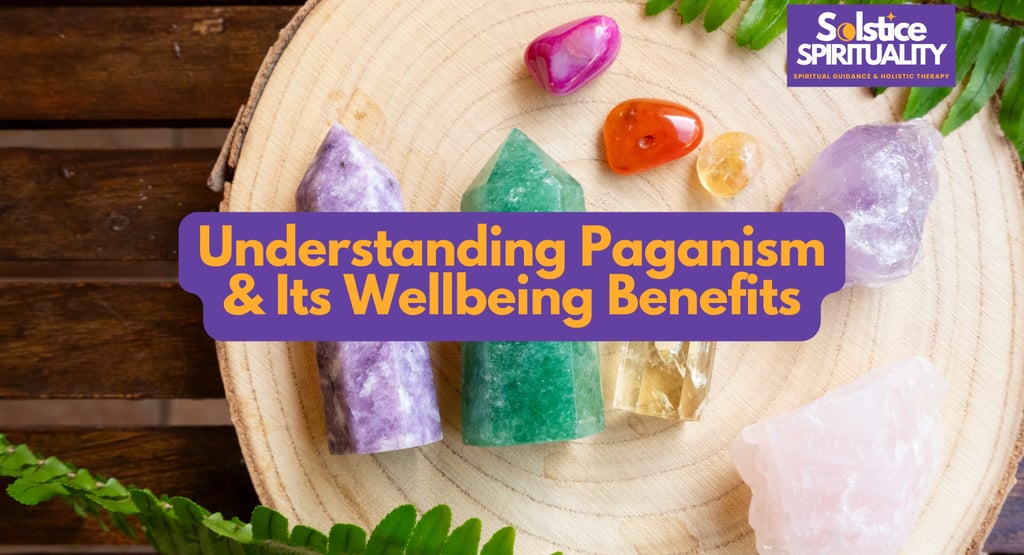
What is Paganism?
Paganism is a term that encompasses a wide range of spiritual and religious beliefs that are generally outside the major organised religions such as Christianity. This often includes a reverence for nature, polytheism (the belief in lots of gods and goddesses) and a focus on personal spiritual experiences for personal growth and self-discovery - much like what Solstice Spirituality embodies.
It is rooted in ancient traditions native to Britain and Europe, and includes practices that are deeply connected to the Earth and its natural cycles. Understanding what Paganism is involves recognising its diversity, including various practices and beliefs such as Wicca, Druidry, and Heathenry.
Why is Paganism Considered Taboo?
The taboo surrounding Paganism largely stems from historical narratives and religious biases. Throughout history, Pagan traditions were often demonised by the dominant Christian narratives, leading to misunderstandings and stigma. Reasons for this include fear of the unknown, coupled with campaigns that sought to eradicate Pagan practices and destroy Pagan temples during the witch hunts and the spread of Christianity across Europe. Many still equate Paganism with witchcraft and dark practices, reinforcing its taboo status in contemporary society. But that is far from the truth and beauty of what Paganism is: it is about reconnecting with nature, your ancestors, and yourself.
The Benefits of Practicing Paganism for Wellbeing
Engaging with Pagan traditions can provide significant benefits for individuals seeking to improve their wellbeing. One of the key advantages is the strong connection to nature, which encourages mindfulness and an appreciation for the natural world around us. This can lead to reduced stress and enhanced mental health. Many people also engage in spiritual rituals that promote community and interconnectedness, fostering supportive relationships that benefit emotional wellbeing.
Additionally, the practice of Paganism often involves personal empowerment and self-exploration. It encourages individuals to take ownership of their life and spiritual path, leading to a greater sense of empowerment, confidence, and a deeper understanding of yourself. The rituals and celebrations present in various Pagan traditions can also provide a sense of belonging and identity, which is vital for holistic wellbeing.
Understanding Paganism is essential to demystifying its practices and alleviating the age-old stigmas attached to it. Its taboo nature often stems from historical biases, yet practicing Paganism can offer profound benefits for your mental, emotional, and spiritual wellbeing. Embracing these diverse, ancient, nature-based traditions not only allows for personal growth - it also fosters a better relationship with nature and the community, enhancing overall wellbeing in today’s world.
Solstice Spirituality
Est. 2025


Member of ABCAP (Accredited Board for Counsellors and Psychotherapists) since 2026
No. 19798
Follow on social media:

